MISIÓN

Generar y transferir conocimiento científico y tecnológico en estudios ambientales y agrícolas, integrando conocimientos locales, para contribuir a la sostenibilidad de los sistemas productivos, la conservación de los recursos naturales y el desarrollo territorial con pertinencia intercultural.

VISIÓN

Ser un grupo de investigación reconocido a nivel nacional e internacional por su aporte científico y tecnológico en el estudio del ambiente y la producción agrícola, destacándose por la articulación entre ciencia y saberes interculturales, con impacto en la sostenibilidad ambiental y la competitividad del sector agrícola.

OBJETIVO GENERAL

Desarrollar investigación científica aplicada en estudios ambientales y agrícolas, orientada al análisis de ecosistemas y procesos productivos, mediante el uso de tecnologías y la integración de conocimientos interculturales, promoviendo soluciones sostenibles e innovación para el sector productivo.

LÍNEAS DE INVESTIGACIÓN

  • Energías renovables y protección ambiental ( Eficiencia energética, Manejo y Aprovechamiento de Recursos Renovables, Manejo eficiente y sustentable de los recursos hídricos)
  • Arte Cultura y patrimonio (Turismo, Interculturalidad y dialogo de saberes, Historia, arqueología y saberes ancestrales)
  • Procesos tecnológicos Artesanales e industriales (Manufactura e industria, Seguridad e higiene industrial)

INTEGRANTES

COORDINADORA DEL GRUPO

Ing. Maritza Carolina Sánchez Capa, MsC

COORDINADOR SUBROGANTE

Ing. Leonardo Daniel Cabezas Andrade

INVESTIGADORES

  • Ing. Juan Santiago Hidalgo Viteri, PhD
  • Ing. Pablo Danilo Carrera Oscullo, Msg
  • Ing. Demmy Jussey Mora Silva, MsC
  • Ing. Tannia Jazmín Vargas Tierras, MsC
  • Ing. Estefanía Alejandra Segarra Jiménez, MsC
  • Ing. Carlos Mestanza Ramón, Ph.D
  • Ing. Pedro Andrés Peñafiel Arcos, MsC

INVESTIGADORES EXTERNOS

  • Guiorio Anfuso
  • Karol Arrova
  • Paola Guala

PROYECTOS DE INVESTIGACIÓN

The project “Environmental impact of artisanal and industrial gold mining on the rivers and aquifers of Ecuador” within the research doctorate program in environmental sciences and engineering, between the universities of Calabria, Italy and the Superior Polytechnic School of Chimborazo (ESPOCH), will provide the following contributions:

  • To determine and characterize the current situation regarding artisanal and industrial gold mining in Ecuador.
  • Identify the main environmental impacts on rivers and aquifers in Ecuador, generated by gold mining in artisanal and industrial processes.
  • To determine the main conflicts in the mining activities in the artisanal and industrial processes of legal and illegal gold extraction in Ecuador, allowing to promote the achievement of the good life and to diminish the environmental impacts.
  • Construct an inventory of mining activities in the processes of artisanal and industrial gold extraction, legal and illegal.

The research will use innovative methodologies according to the new trends of science in the field of study. It will provide comprehensive contributions that will strengthen the knowledge of the public and private sectors, NGOs and academia, providing updated and verified information. Data that will serve to propose macro solutions in the processes of environmental control and monitoring at all hierarchical levels, both national and sectional, as well as contribute to the problems identified in countries of the region such as Brazil, Bolivia, Peru and Colombia. Finally, it will be a tool that will allow to propose new policies and strategies oriented to the conservation and correct management of the natural environment and its resources, centralized in the subject of study of artisanal and industrial gold mining. 

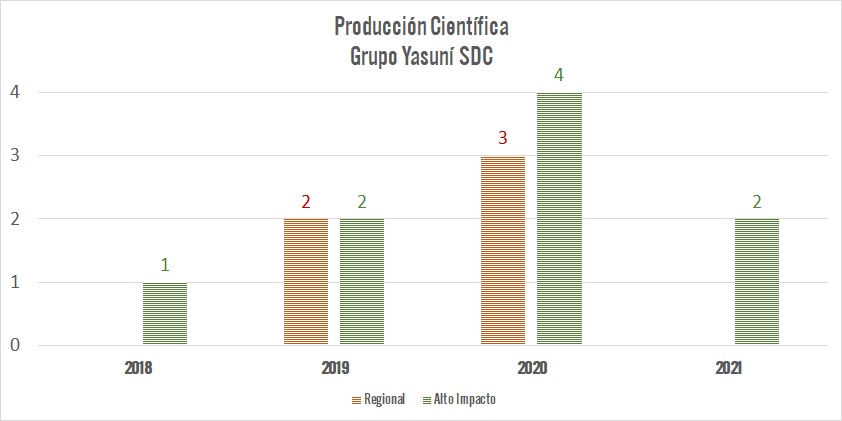
PRODUCCIÓN CIENTÍFICA DE YASUNI SDC

Conflict and Impacts Generated by the Filming of Discovery Channel’s Reality Series “Naked and Afraid” in the Amazon: A Special Case in the Cuyabeno Wildlife Reserve, Ecuador.

Carlos Mestanza Ramón, Ph.D.
PROFESOR TITULAR

2018

Journal: Sustainability.

DOI: https://doi.org/10.3390/su12083468

Beach litter in Ecuador and the Galapagos islands: A baseline to enhance environmental conservation and sustainable beach tourism.

Carlos Mestanza Ramón, Ph.D.
PROFESOR TITULAR

2019

Journal: Marine Pollution Bulletin.

DOI: https://doi.org/10.1016/j.marpolbul.2019.02.003

Integrated Coastal Zone Management in Continental Ecuador and Galapagos Islands: Challenges and Opportunities in a Changing Tourism and Economic Context.

Carlos Mestanza Ramón, et al.
PROFESOR TITULAR

2019

Journal: Sustainability.

DOI: https://doi.org/10.3390/su11226386

Capacidad de carga turística para el desarrollo sostenible en senderos de uso público: un caso especial en la reserva de producción de fauna Cuyabeno, Ecuador.

Carlos Mestanza Ramón, Ph.D.
PROFESOR TITULAR

2019

Journal: Caribeña de Ciencias Sociales.

DOI: https://www.eumed.net/rev/caribe/2019/03/reserva-producccion-fauna.html

Tortugas Charapa un aporte para el turismo comunitario y conservación de la biodiversidad.

Carlos Mestanza Ramón, et al.
PROFESOR TITULAR

2020

Journal: Ciencia Digital.

DOI: doi.org/10.33262/exploradordigital.v4i1.1075

Tortugas Charapa un aporte para el turismo comunitario y conservación de la biodiversidad.

Carlos Mestanza Ramón, et al.
PROFESOR TITULAR

2020

Journal: Ciencia Digital.

DOI: doi.org/10.33262/exploradordigital.v4i1.1075

An Attempt to Characterize the “3S” (Sea, Sun, and Sand) Parameters: Application to the Galapagos Islands and Continental Ecuadorian Beaches.

Carlos Mestanza Ramón, Ph.D.
PROFESOR TITULAR

2020

Journal: Sustainability.

DOI: https://doi.org/10.3390/su12083468

Tourism in Continental Ecuador and the Galapagos Islands: An Integrated Coastal Zone Management (ICZM) Perspective.

Carlos Mestanza Ramón, Ph.D.
PROFESOR TITULAR

2020

Journal: Water.

DOI: https://doi.org/10.3390/w12061647

Coastal Scenic Evaluation of Continental Ecuador and Galapagos Islands: Human Impacts and Management Issues.

Carlos Mestanza Ramón, Ph.D.
PROFESOR TITULAR

2020

Journal: Journal of Marine Science and Engineering.

DOI: https://doi.org/10.3390/jmse8060468

In-Situ and Ex-Situ Biodiversity Conservation in Ecuador: A Review of Policies, Actions and Challenges.

Carlos Mestanza Ramón, et al.
PROFESOR TITULAR

2020

Journal: Diversity.

DOI: https://doi.org/10.3390/d12080315

Perspectiva de conservación del suelo en la Amazonía ecuatoriana.

Maritza Sánchez Capa, et al.
PROFESOR ocacional 2

2020

Journal: Green World Journal.

DOI: https://www.greenworldjournal.com/doi-022-gwj-2020

Design of Nature Tourism Route in Chimborazo Wildlife Reserve, Ecuador.

Carlos Mestanza Ramón, Ph.D.
PROFESOR TITULAR

2021

Journal: Journal of Environmental Research and Public Health.

DOI: https://doi.org/10.3390/ijerph18105293

Nature Tourism on the Colombian—Ecuadorian Amazonian Border: History, Current Situation, and Challenges.

Carlos Mestanza Ramón, Ph.D.
PROFESOR TITULAR

2021

Journal: Sustainability.

DOI: https://doi.org/10.3390/su13084432

Integrative project: a luxury to achieve knowledge based on wind-power prototype.

Maritza Sánchez Capa, MSc.
PROFESOR OCACIONAL 2

2020

Journal: Espacios.

DOI: www.revistaespacios.com/a20v41n24/ 20412414.html

Capacidad de Carga turística una herramienta para la gestión sostenible en áreas protegidas.

Carlos Mestanza Ramón, et al.
PROFESOR TITULAR

2019

Journal: Tierra Infinta.

DOI: https://doi.org/10.32645/26028131.952